|
Visit These 3 Magical Locations In Greece This YearA visit to Greece offers the best in sunshine, historic ruins and quaint architecture. The country’s endless beaches are always welcoming, lined by the balmy Aegean Sea. Meanwhile, the culture is truly alive with delicious cuisine and passionate music. Many locations stand out, including the Parthenon and Acropolis in Athens, but if you have seen all the well-known sights, Greece also has some magical places that must be visited. Here we briefly explore just three of these unique attractions, including the Oracle of Delphi, the Antikythera Mechanism and the Tourlitis Lighthouse. 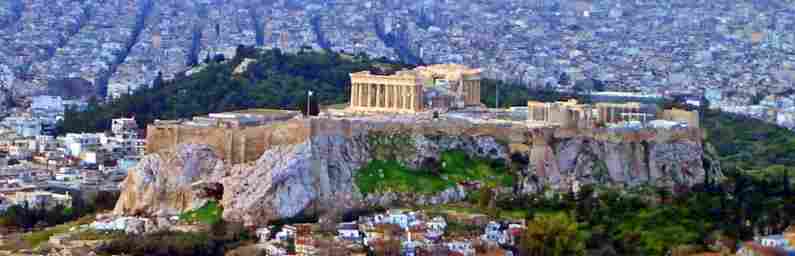
1. Oracle of DelphiWhile enjoying a luxurious holiday in Greece, take a moment away from the beaches, restaurants and other attractions and explore the country’s unique history. To the ancient Greeks, Delphi was the centre of their world. It is a site sacred to the god Apollo, where all Greeks united to worship. However, despite this, Delphi is a dark and strange place, a mysterious sanctuary where the priestess of Apollo made her prophecies. 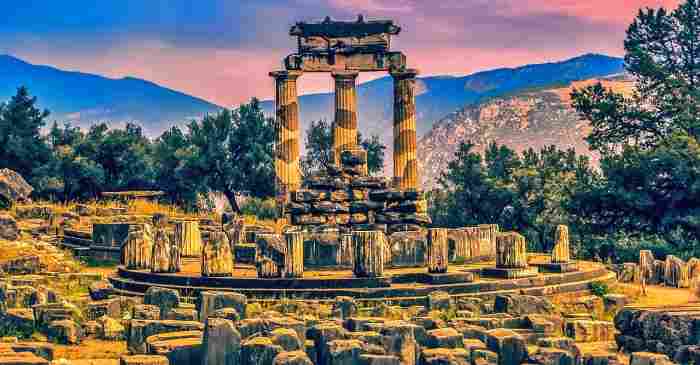
According to the legends, Pythia, the priestess, sat above a chasm, which belched fumes from the earth. She breathed deeply of these fumes, which many believe had hallucinogenic properties, and fell into semi-consciousness. This didn’t stop Pythia from making her dark and frantic prophecies. The location became the Oracle of Delphi, the Greek’s most feared window into the will of the gods. According to the historian Strabo, it lay in a cavern in the depths of the hillside, beneath the great Temple of Apollo. 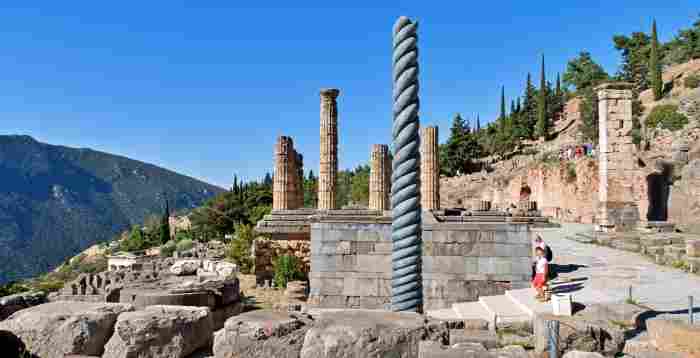
Today, visitors can explore the ruins of the Temple on the slopes of Mount Parnassus. The structure was destroyed in 390 CE by the Emperor Theodosius, in an effort to eradicate the old pagan beliefs. While few traces remain of the Oracle, the site is still eerie to visit, especially when mist clings to the surrounding hills. 2. Antikythera MechanismA shipwreck lay off the coast of the island of Antikythera for more than 2,000 years. However, in 1900, sponge divers discovered the wreck and found a fascinating device inside it. While it was obviously a device of remarkable engineering, no one had any idea how remarkable it truly was. The enigmatic device sat in a museum for 50 years before anyone decided to take a serious look at it. 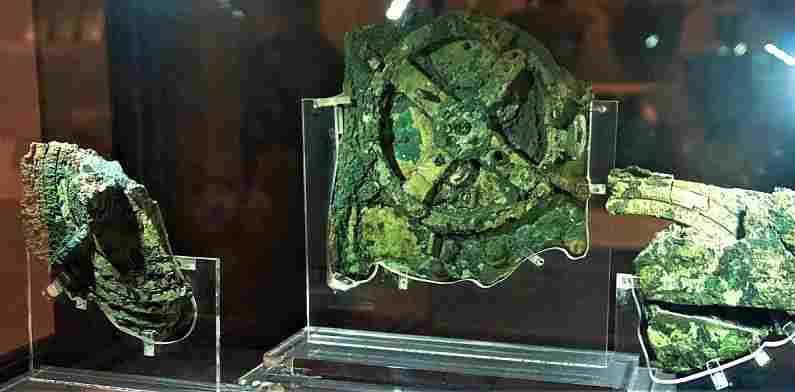 Image Joyofmuseums/Wikimedia Commons These days, it is known as the Antikythera Mechanism and is said to be a “clockwork computer.” The small bronze instrument turned out to be a 2,000-year-old computer, demonstrating remarkable engineering and astronomical precision and it totally unique. According to the experts, more than 30 gears are hidden behind the mechanism’s dials and it is the most advanced technological artefact of the pre-Christian period. This “analogue computer” can make precise calculations based on astronomical and mathematical principles. The creator’s identity remains a mystery, but scientists have worked for a century to piece together the history of the mechanism. Surprisingly, most experts think it unlikely that the Antikythera Mechanism was a navigational tool, as the harsh environment of the sea would have been a danger to its delicate gears. Of course, the fact that the ship was wrecked also makes it unlikely that such an intricate object was a navigational tool! 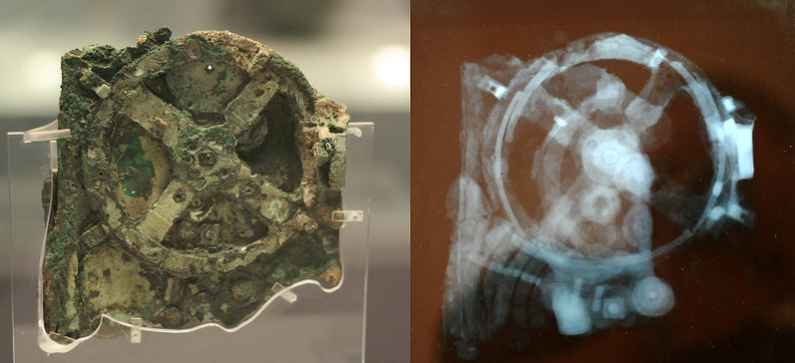
Many researchers believe the mechanism was used to teach astronomy. For example, to use the mechanism, you would simply enter a date using a crank and when the gears stopped spinning, the information would appear at your fingertips, including the positions of the Sun, Moon, stars, planets, lunar phase, upcoming solar eclipses and more. The Antikythera Mechanism can be seen in the Bronze Collection of the National Archaeological Museum of Athens. 3. Tourlitis LighthouseLocated in Andros, Greece, the Tourlitis Lighthouse is perched on a spindly rock spire and would make the perfect wizard’s tower. Nestled off the coast of the port city, it looks like something straight out of a fantasy novel. 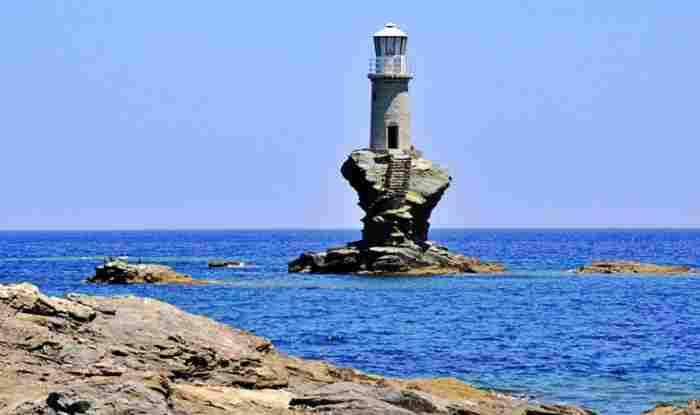 Image by anjci/Wikimedia Commons The Tourlitis Lighthouse was first built in 1897 on a stone column. However, that column has been shaped by years of natural erosion into a fascinating spiral. Regrettably, the original lighthouse was destroyed during World War II, but was rebuilt in the early 1990s by an oil tycoon, who dedicated it to his daughter. 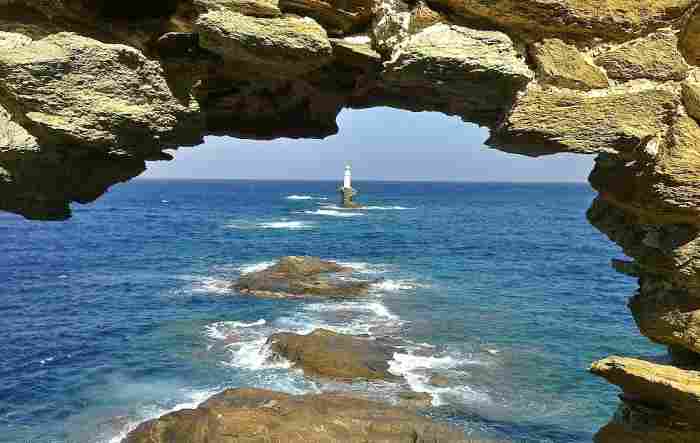 Image by Apostolispontikas at Greek Wikipedia Later, Tourlitis became Greece’s first automated lighthouse, which eliminated the need for an onside keeper to operate the light. However, even with its modern upgrade, it still resembles something out of Dungeons and Dragons, with its winding staircase hewn from the solid rock itself. While enjoying the attractions of your luxurious resort or hotel, make sure you make a couple of fascinating excurions to these magical and sometimes mysterious locations.
| Bosnia
and Herzegovina | Bulgaria
| Croatia
| Czech
Republic | Estonia
| Hungary
| Latvia
| Lithuania
| Macedonia
| Poland
| Romania
| Russia
| Slovak
Republic | Slovenia
| Ukraine
| Yugoslavia
|
Copyright © All Europe Accommodation Latest update: August 12, 2021 |
|